C2PA: what it is and how it makes content history verifiable
Learn how C2PA works through manifests, signatures and content provenance, with practical examples, blockchain differences and verification limits.
What C2PA is
C2PA stands for Coalition for Content Provenance and Authenticity. The coalition develops an open standard for attaching cryptographically verifiable provenance information to digital content. Its goal is to make part of an asset's history inspectable: which tools produced or modified it and which claims are associated with the version we are viewing.
This history is represented through Content Credentials. C2PA is not an image format, a universal artificial intelligence detector, or a system that decides whether a news story is true. Instead, it defines how provenance data is created, signed, and verified. The distinction matters to readers: content can be correctly signed and still be used in a misleading context.
How it works: asset, manifest, and signature
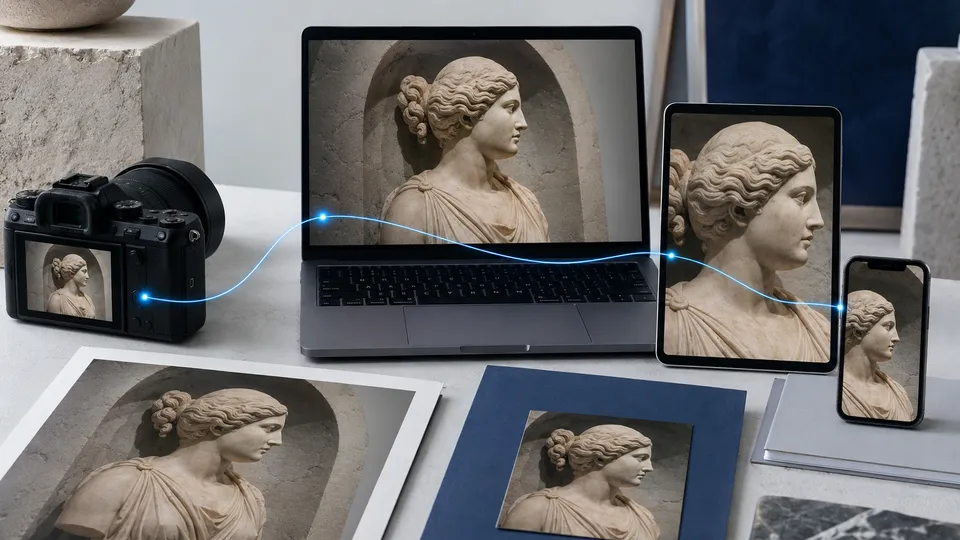
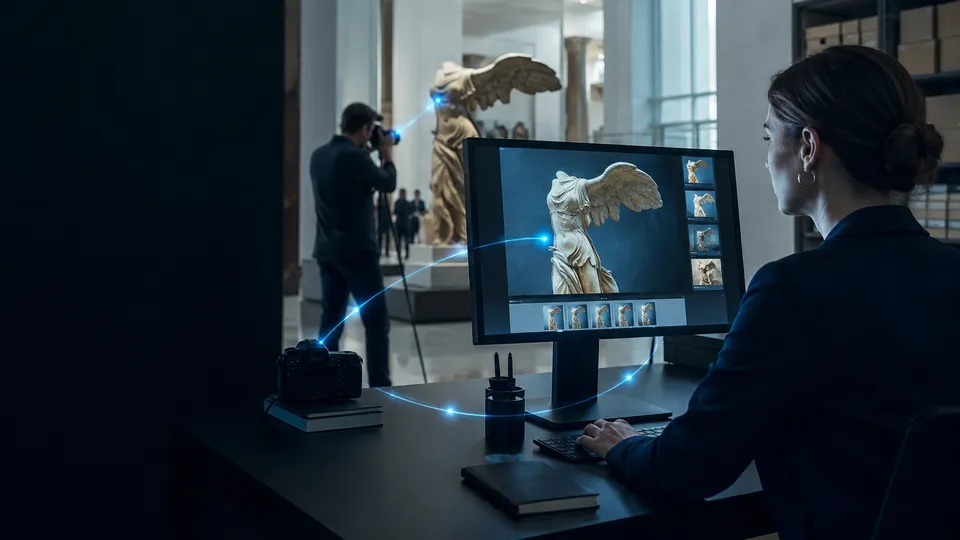
Imagine a newsroom that receives a photograph, crops it, and publishes it. In a C2PA-compatible workflow, each step can contribute to the available history without confusing the original photo with the final version. Camera compatibility alone is not enough: every later step must also handle the data correctly.
The C2PA technical specification describes three elements that should be kept distinct:
- Asset: the content to which the credential refers, such as a photograph.
- Manifest: the structure containing claims, references, and the cryptographic binding to the asset.
- Signature: protects the signed claims and allows them to be evaluated under the verifier's trust model.
The verifier checks both the signed data and its binding to the content. It does more than read a text description. Verifying the signer's certificate is a separate check from matching the file: a clear result should explain both.
What can be verified
C2PA becomes useful when you ask a precise question. “Does this version match the credential?” is a technically verifiable question. “Does this scene prove the claim that accompanies the post?” also requires journalistic or documentary checks.
| Question | How provenance can help |
|---|---|
| Is the file consistent with the signed data? | The verifier can check the cryptographic binding. |
| Which operations were declared? | Available actions can describe some processing steps. |
| Were other assets used? | Ingredients can refer to source content. |
| Is the scene real and accurately described? | The credential does not replace checking the context. |
The identity associated with the signing key should not automatically be treated as the human author. Depending on the workflow, it may represent a device, an application, or an organization. Attribution information should be read for what it declares, without adding unsupported conclusions.
C2PA and AI-generated content
An image created or modified with artificial intelligence can have valid Content Credentials. Provenance makes claims about the process available; it does not exclude synthetic content in advance. A real photograph and a generated illustration can both be transparent about how they were produced.
Conversely, the absence of credentials does not mean that AI was used. The file may come from an incompatible tool, may have been exported without metadata, or may have lost it during distribution. When assessing an online image, follow an image verification method that also covers its source and context.
Are C2PA and blockchain the same thing?
No. C2PA organizes and protects provenance information associated with an asset. Blockchain notarization can record an external reference to the fingerprint of a particular version. They are separate layers that a product may combine, but C2PA does not require a blockchain to work.
Consider a report containing an image: credentials can describe the image's history, while external proof can refer to the exact version of the distributed report. Always state which object each proof covers. Signing the photo does not also certify the title, caption, and text of the web page.
Where an organization should start
Before choosing an integration, identify a narrow workflow, such as the images in a press room. List every step between capture and publication, including resizing, conversion, and CDN distribution. Then choose the useful provenance data and the point at which the public version should be signed.
A pilot should answer three questions: can the audience open the verification? Does the downloaded file retain the expected information? Do updates produce an understandable history? These checks are more meaningful than the mere presence of an icon.
At SCE, the starting point is our C2PA credentials solution. For implementation details, read about the CMS and API workflow.
Frequently asked questions
For specific cases, explore the differences between C2PA and watermarks and the process for declaring the origin and modifications of AI images.
Does C2PA prevent someone from editing an image?
No. It does not block editing. A compatible workflow can document new processing; an edit that is inconsistent with the credential may instead cause a check to fail or interrupt the available history.
Does a valid signature prove that a photograph is real?
No. It helps evaluate claims and their binding to the content. The truth of the scene, its caption, and the way the photo is used require further checks.
Do I need to understand cryptography to read credentials?
Not necessarily. A verification interface can summarize the results and provide technical details when needed. The guide to reading Content Credentials explains which information to examine first.
Sources and further reading
Technical and editorial references consulted for this guide. Examples are illustrative and do not document real cases or specific integrations.